Verification
Hub volunteers verify the records following the completion of the bioblitz. They do this directly in iNaturalist, confirm and correcting the records within 5 days of the event. Other iNaturalist users who are familiar with a particular taxon can also verify records by agreeing or disagreeing with a given identification. Records require two or more users to agree with an identification for them to reach Research Grade. Other requirements are:
- A valid date
- Valid location
- A photograph of the sighting
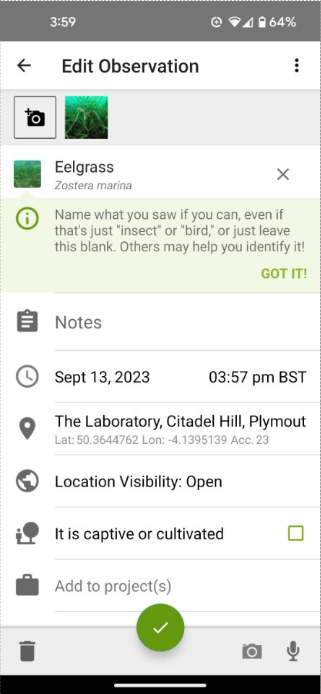
- The organism is not captive/cultivated
- Two or more agreed identifications
Recording sightings directly through the app can help with the verification, as taking the photo through the app will automatically record the date and location, and there is an integrated identification tool to help identify the species from the photograph provided.
The Rock Pool Project team create an iNaturalist project for each bioblitz location with a specific boundary for the survey locations and times. Any records that fall outside of this are not added to the bioblitz results, aiding the verification of the time and location of sightings.
![[The Rock Pool Project process image]](/assets/images/citizen-science/case-studies/rock-pool-project/TRPP_Process_Verification_1.jpg)